A 5-minute bedtime breathing routine
Set up for sleep first
1 minLights low, phone face down or out of reach, alarm already set. Lie on your back or your side.
Let out a long breath
10 secBreathe out slowly through your mouth to mark the switch from day to night.
Pick one pattern
4-7-8 if you like a short, set routine. 7-11 or 4-6 if you'd rather not hold your breath. Use the same one each night.
Breathe for about 3 to 5 minutes
3–5 minFour breaths of 4-7-8 (repeat a set if you like), or a few minutes of 7-11, 4-6, or 6-6. Follow a pacer or haptic cue instead of counting.
Let the pattern go
When the time is up, stop counting and let your breathing find its own pace. Don't check whether it "worked."
Which breathing exercise is best for sleep?
There isn't one best pattern. The Sleep Foundation lists several popular options, including belly breathing, box breathing, and 4-7-8. Pick the one you find most comfortable. These four are all in Birch:
- [4-7-8](/guides/4-7-8-breathing) (inhale 4, hold 7, exhale 8): a short four-breath routine. Dr. Weil suggests it to help you fall asleep.
- [7-11](/guides/7-11-breathing) (inhale 7, exhale 11): no holds, a long, wave-like exhale, done for several minutes.
- [4-6](/guides/4-6-breathing) (inhale 4, exhale 6): the easiest long-exhale rhythm, six breaths a minute.
- [Coherent 6-6](/guides/coherent-breathing) (inhale 6, exhale 6): even and steady, five breaths a minute.
The routine itself becomes a signal that it's time to sleep.
Why slow breathing at bedtime
Slow breathing is one way to bring on what the NIH's NCCIH calls the relaxation response: slower breathing, lower blood pressure, and a lower heart rate, the opposite of the stress response. A wind-down routine also gives your mind one simple thing to follow instead of replaying the day. Many people find that the routine itself becomes a signal that it's time to sleep.
Who it's for
Anyone who wants a calmer, more consistent wind-down. If you have ongoing trouble falling or staying asleep, snore heavily, or wake up gasping, talk to a doctor. Breathing exercises aren't a substitute for care.
Common mistakes
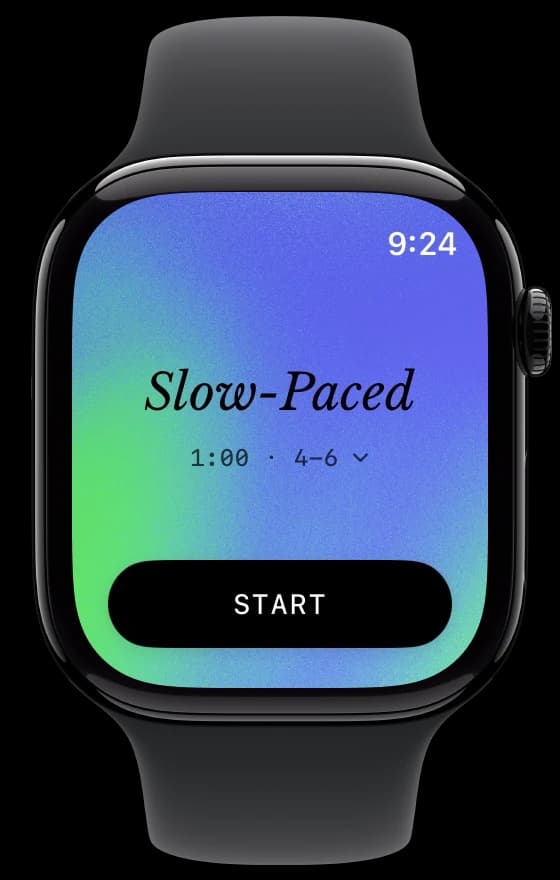
- Doing it on a bright screen. Use audio, haptics, or memory. Birch's Apple Watch app taps your wrist for each phase, so your eyes can stay closed.
- Trying too hard. Big, forceful breaths are energizing. Keep every breath quiet.
- Switching patterns every night. Repetition is part of the cue. Keep one for at least a week or two.
- Judging it by whether you fell asleep. Count it as done when you did it. The habit is the win.
How long to practice
Three to five minutes in bed is plenty. With 4-7-8, Dr. Weil suggests four breaths at a time for the first month. A short daytime session helps too: it's easier to use a pattern at night once it's familiar. See how to build a daily breathing habit.
Bedtime breathing with Birch
Birch has all four of these patterns on iPhone and Apple Watch. Set a time or number of cycles once, then start from your wrist in the dark. Add a "wind down" habit with a reminder at the time you want to be in bed, and see it beside your breathing across the week.
Download on theApp Store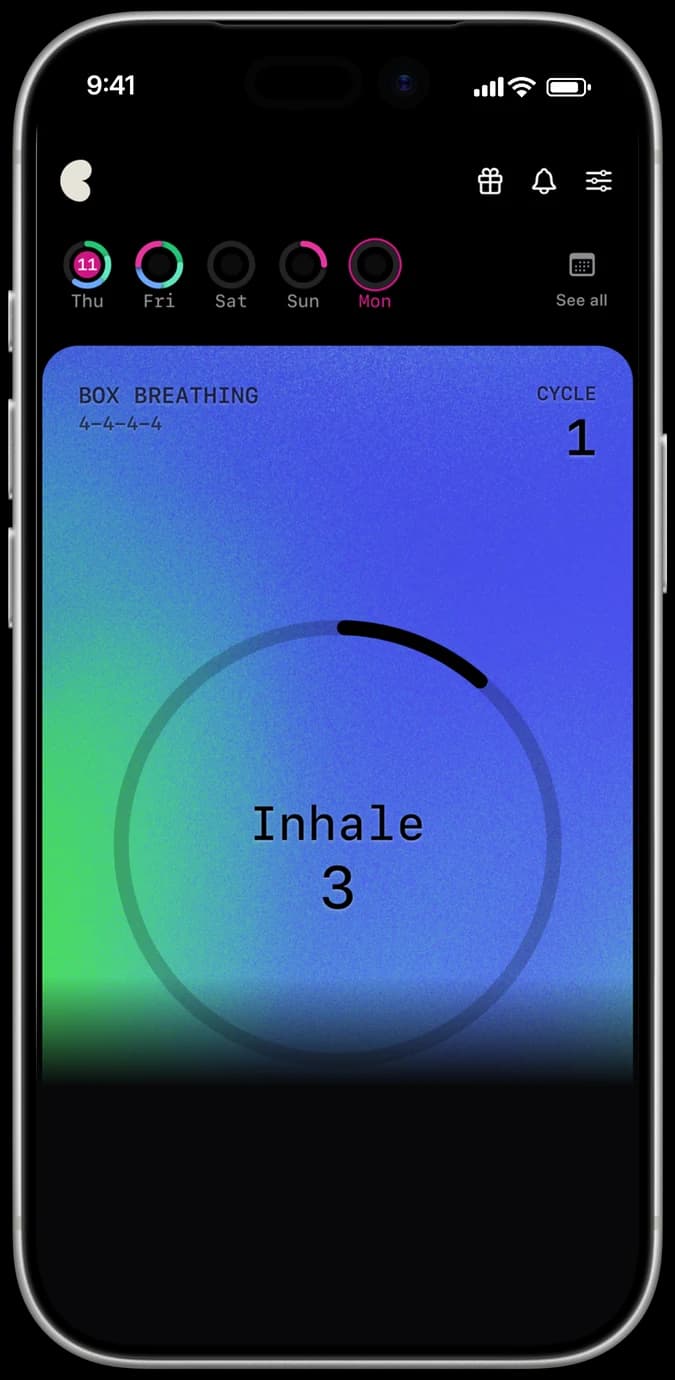
Frequently asked questions
What is the best breathing exercise to fall asleep?
The one you'll actually do every night. 4-7-8, 7-11, and 4-6 are popular because they slow you down and have a long exhale. Pick one, keep it for a couple of weeks, and see how it feels.
How can I fall asleep fast with breathing?
No breathing exercise can guarantee fast sleep. A few minutes of slow, long-exhale breathing in a dark room is a calm way to wind down. If sleep problems last, see a doctor.
Should I breathe through my nose or mouth?
Most guides suggest breathing in through your nose. With 4-7-8, you breathe out through your mouth. With 7-11 and 4-6, either is fine, as long as it's soft.
How long before bed should I do breathing exercises?
Right as you lie down works well. Some people also do a short session 30 to 60 minutes before bed as part of a wider wind-down.
Is there a free sleep breathing app?
Birch is free on iPhone and Apple Watch, with no ads, no subscription, and no account. Its Watch app guides each breath with haptics, so you don't need to look at a screen.
More breathing guides
 Weil MethodHow to do 4-7-8 breathing
 Gentle WaveHow to do 7-11 breathing
 Slow-Paced 4-6How to do 4-6 breathing
 4-4-4-4How to do box breathing
 Heart Coherence 6-6How to do coherent breathing
 Apple WatchHow to do breathing exercises on Apple Watch
 Guide · Breathing + habitsHow long should you do breathing exercises?
Breathe along with Birch
Birch paces every pattern on this page for you on iPhone, and on Apple Watch with gentle haptic cues, so you can keep your eyes closed. Keep small daily habits beside your breathing. Free, with no ads, no account, and no subscription.
Download on theApp Store
Sources
- Sleep Foundation — Breathing Exercises for Sleep
- NCCIH (NIH) — Relaxation Techniques: What You Need To Know
- Andrew Weil Center for Integrative Medicine — 4-7-8 Breath (patient handout)
- Student Minds — 7-11 breathing exercise
This guide is for general wellness and education. Birch is not a substitute for professional medical advice. Stop if you feel dizzy or unwell, and talk to a clinician about any health concern.