Build a daily breathing habit in 6 steps
Pick an anchor
1 minChoose something you already do every day: pouring coffee, sitting down at your desk, getting into bed.
Write the habit stack
1 min"After I pour my morning coffee, I will do four breaths of 4-7-8." Specific beats vague.
Start tiny
1–2 minOne or two minutes a day. You can always do more. Small makes it hard to skip.
Set a reminder
30 secPut a reminder at the anchor time as a backup, not as the main trigger.
Log it and look weekly
10 secMark it done. Once a week, glance at your week or month. Missed days happen. Just pick it up again.
How long per session, by pattern
- [4-7-8](/guides/4-7-8-breathing): four breaths, at least twice a day (Dr. Weil). Cleveland Clinic suggests three cycles twice a day while learning.
- [Box breathing](/guides/box-breathing): three to four rounds, once or twice a day (Cleveland Clinic).
- [7-11](/guides/7-11-breathing): 5 to 10 minutes (Student Minds).
- Slow breathing in general ([4-6](/guides/4-6-breathing), [coherent](/guides/coherent-breathing)): at least 5 minutes, ideally daily (NHS).
- Belly (diaphragmatic) breathing practice: 5 to 10 minutes, three to four times a day at first (Cleveland Clinic).
The habit matters more than the length of any one session.
How long do breathing exercises take to work?
Many people notice they feel calmer during or right after a session. Whether it adds up over weeks is less certain, and it varies from person to person. A 2023 meta-analysis of randomized trials found breathwork was linked to lower self-reported stress than control conditions, with a small-to-medium effect. The authors urged caution about hype. In a Stanford study, people practiced for just 5 minutes a day for a month.
So the honest answer: expect a short-term reset now, and treat any longer-term change as a bonus of doing it regularly. That's why the habit matters more than the length of any one session.
Habit stacking: the easiest way to remember
Habit stacking, described by James Clear and based on BJ Fogg's Tiny Habits work, pairs a new habit with one you already do. The formula is: After [current habit], I will [new habit]. A few breathing stacks:
- After I pour my morning coffee, I will do four breaths of 4-7-8.
- After I sit down at my desk, I will do one minute of box breathing.
- After I park the car at home, I will do five breaths of 4-6 before I go in.
- After I get into bed, I will do 7-11 breathing until the timer ends.
Who it's for
This is for anyone who has tried breathing exercises, liked them, and then forgot about them. It's the most common way people fall off. If you already keep other small daily habits, like water, vitamins, or a walk, breathing fits right beside them.
Common mistakes
- Starting too big. 20 minutes a day sounds great and lasts a week. Two minutes lasts.
- Relying only on motivation. Use an anchor and a reminder. Don't wait to feel like it.
- All-or-nothing streaks. Missing one day is normal. Missing two is where habits slip, so just do the next one.
- Changing patterns constantly. Pick one and give it a few weeks before you switch.
Tracking breathing and habits in Birch
Birch was built for this. Breathe with any of six patterns on iPhone or Apple Watch, and keep small yes/no or count habits (drink water, take vitamins, read, walk, or your own) on the same screen. Set gentle reminders at times you choose. Your breathing cycles, completed habits, streaks, and monthly summaries show together. Missed a day? Log today or update a recent day. Progress without pressure, free with no ads or account.
Download on theApp Store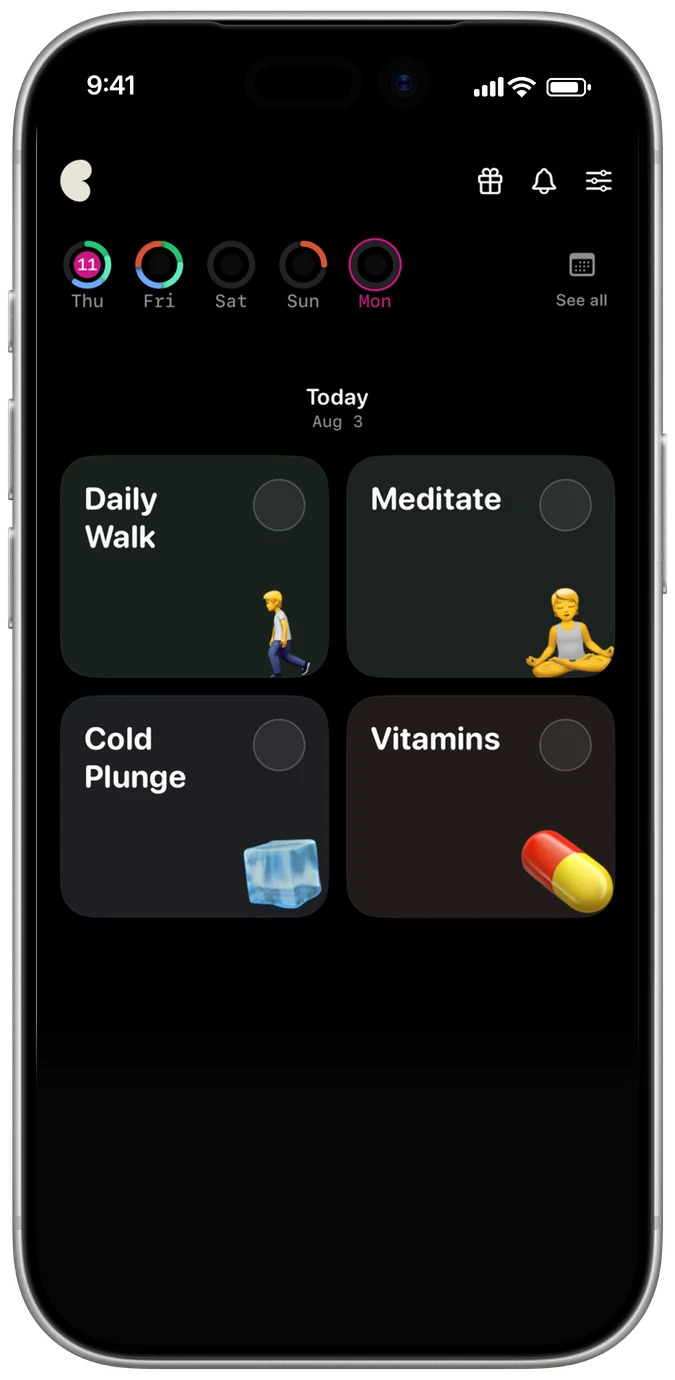
Frequently asked questions
How many minutes a day should I do breathing exercises?
Start with 1 to 5 minutes, once or twice a day. Common guidance ranges from four breaths of 4-7-8 twice a day to at least 5 minutes of slow breathing (NHS).
How long do breathing exercises take to work?
Many people feel calmer during a session. Longer-term changes are less certain and vary. Research on regular breathwork is promising but mixed, so treat consistency as the goal.
Is it better to do breathing exercises in the morning or at night?
Whichever you'll keep. Morning stacks (after coffee) are easy to remember. Bedtime stacks double as a wind-down. Some people do both.
What if I miss a day?
Just do the next one. A missed day doesn't erase anything. In Birch you can also log a recent day you forgot to record.
Can I track breathing as a habit?
Yes. Birch shows breathing sessions beside your daily habits across your week and month, with streaks and reminders.
More breathing guides







Breathe along with Birch
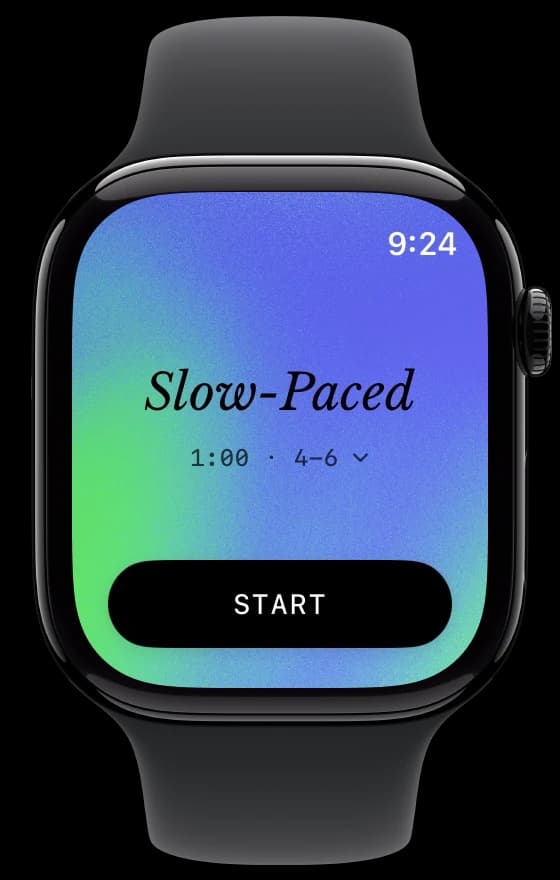
Birch paces every pattern on this page for you on iPhone, and on Apple Watch with gentle haptic cues, so you can keep your eyes closed. Keep small daily habits beside your breathing. Free, with no ads, no account, and no subscription.
Download on theApp Store
Sources
- Andrew Weil Center for Integrative Medicine — 4-7-8 Breath (patient handout)
- Cleveland Clinic — 4-7-8 Breathing Method for Sleep and Relaxation
- Cleveland Clinic — Box Breathing Benefits and Techniques
- Student Minds — 7-11 breathing exercise
- NHS — Breathing exercises for stress
- Cleveland Clinic — Diaphragmatic Breathing
- Fincham et al., 2023. Effect of breathwork on stress and mental health: A meta-analysis of randomised-controlled trials. Scientific Reports
- Balban et al., 2023. Brief structured respiration practices enhance mood and reduce physiological arousal. Cell Reports Medicine
- James Clear — Habit Stacking
This guide is for general wellness and education. Birch is not a substitute for professional medical advice. Stop if you feel dizzy or unwell, and talk to a clinician about any health concern.