4-7-8 breathing, step by step
Get comfortable
10 secSit with your back straight, or lie down if you are winding down for bed. Rest the tip of your tongue on the ridge just behind your upper front teeth and keep it there for the whole exercise.
Empty your lungs
3 secBreathe out completely through your mouth, around your tongue, with a gentle whoosh.
Inhale for 4
4 secClose your mouth and breathe in quietly through your nose while you count to four.
Hold for 7
7 secHold the breath softly for a count of seven. No straining, no clenching. Let your shoulders stay loose.
Exhale for 8
8 secBreathe out through your mouth for a count of eight, lips slightly pursed, with the same whoosh. That is one full breath.
Repeat three more times
about 1 minDo four breaths in total. At one count per second, four breaths take a little over a minute. Then return to normal breathing and notice how you feel.
What 4-7-8 breathing is
4-7-8 breathing is a counted breathing exercise popularized by Dr. Andrew Weil, who describes it in a patient handout as a simple tool for general relaxation and for managing stress. In Birch it is called the Weil Method.
The pattern has three parts: a short inhale, a longer hold, and the longest exhale. In Birch's pacer, one count is one second, so one breath takes 19 seconds. Weil's handout notes that the 4:7:8 ratio matters most, so when you count on your own and the seven-count hold feels like too much at first, a slightly quicker count that keeps the ratio is fine. Work up to full seconds as it gets easier.
The hold should feel like a pause, not a contest.
Who it's for
4-7-8 suits people who like a short, structured routine with a clear end point. Four breaths is a small enough ask that you can do it at a desk, in the car before you walk inside, or in bed with the lights off. Weil suggests using it whenever something upsetting happens, before you react, and to help you fall asleep.
If breath holds feel uncomfortable, start with a no-hold pattern such as 7-11 breathing or 4-6 breathing. If you are pregnant, have a heart or lung condition, or simply feel unwell when you hold your breath, check with a clinician before practicing breath holds.
Common mistakes
- Doing too many breaths too soon. Weil's handout says not to do more than four breaths at one time for the first month. Later you can go up to eight.
- Forcing the hold. The hold should feel like a pause, not a contest. If it feels like a strain, stop and breathe normally, then try again later.
- Gulping the inhale. Breathe in quietly through your nose. A loud, fast inhale defeats the purpose.
- Rushing the exhale. The eight-count out-breath is the longest part. Let it be slow and complete.
- Only using it in a crisis. It is easier to use in a hard moment if you have already practiced it on calm days.
How long to practice
Weil recommends doing it at least twice a day. Cleveland Clinic suggests three cycles twice a day while you learn. Either way, the sessions are short: one to two minutes.
Feeling a little light-headed the first few times is common, and both sources say it passes with practice. If it happens, stop, breathe normally, and try again later. To make it a daily thing, pair it with something you already do, like getting into bed. Our guide to building a daily breathing habit covers this.
Doing 4-7-8 with Birch
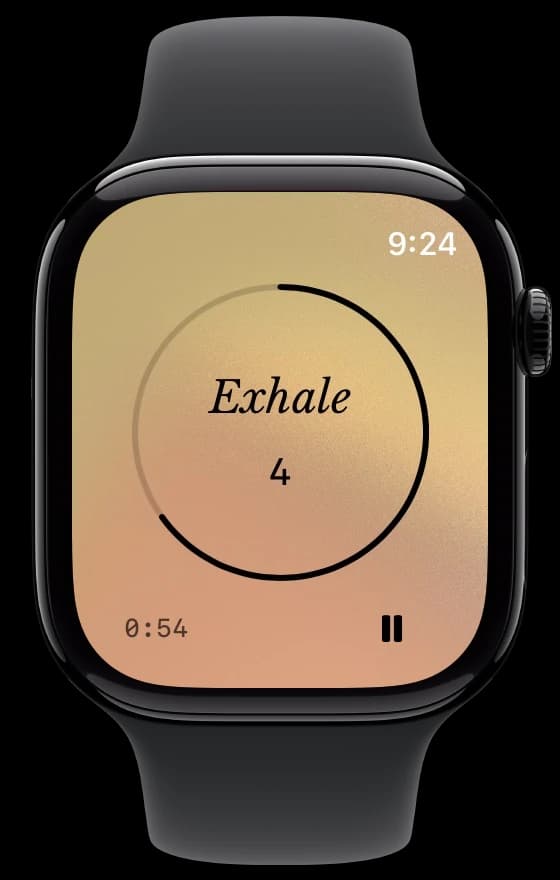
Birch's Weil Method preset guides each phase on screen, so you don't have to count. Set a number of cycles (four is a good start) or a time. On Apple Watch, gentle haptic cues mark each phase, so you can do it in bed with your eyes closed and the phone out of reach. Sessions can count toward Mindful Minutes in Apple Health.
Download on theApp Store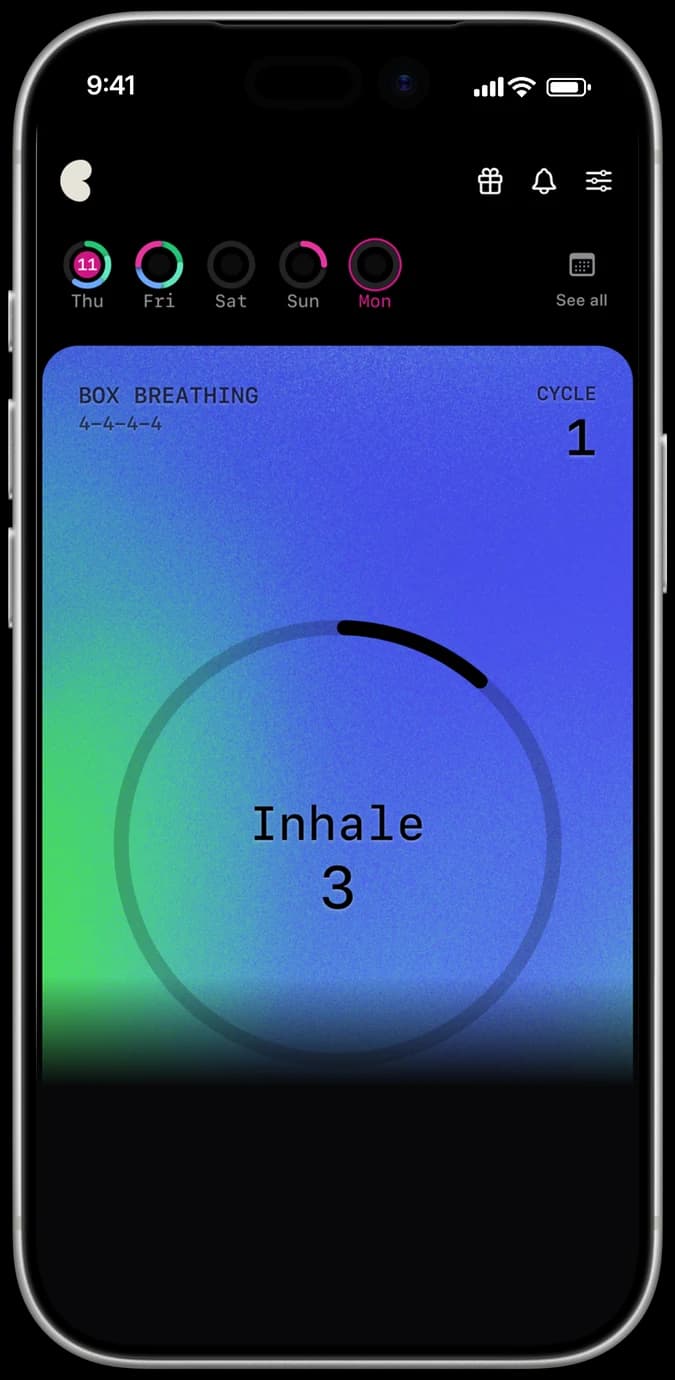
Frequently asked questions
How many times should you do 4-7-8 breathing?
Four breaths at a time, at least twice a day, is the routine in Dr. Weil's handout. He suggests staying at four breaths for the first month, then going up to eight if you want. Cleveland Clinic suggests three cycles twice a day while you learn.
Does 4-7-8 breathing help you fall asleep?
Many people use it as part of a bedtime wind-down, and Weil suggests it for falling asleep. It is a relaxation routine, not a sleep treatment, and results vary from person to person. If trouble sleeping keeps going, talk to a doctor. See our guide to breathing exercises for sleep.
Why do I feel light-headed during 4-7-8 breathing?
It is common at first while your body gets used to slower breathing, and Weil and Cleveland Clinic both say it passes. Stop and breathe normally if it happens, then try again later. Stop altogether if you feel unwell.
Is one count one second?
In Birch, yes: one count is one second, so a full 4-7-8 breath takes 19 seconds. Weil's handout says the 4:7:8 ratio matters most, so if you count on your own and the hold is hard at first, a slightly quicker count that keeps the ratio is fine while you build up.
Can I do 4-7-8 breathing on Apple Watch?
Yes. Birch's Apple Watch app includes the Weil Method with haptic cues for each phase and sessions from 1 to 5 minutes (watchOS 11 or later). Apple's built-in Breathe session uses a simple in-and-out animation rather than set holds. See breathing on Apple Watch.
Is 4-7-8 better than box breathing?
Neither is better. 4-7-8 has a long exhale and a short routine, so many people keep it for winding down. Box breathing has four equal sides and feels steady, so it is often used to reset during the day. Try both and keep the one you'll actually do.
More breathing guides
 4-4-4-4How to do box breathing
 Gentle WaveHow to do 7-11 breathing
 BedtimeBreathing exercises for sleep
 Heart Coherence 6-6How to do coherent breathing
 Slow-Paced 4-6How to do 4-6 breathing
 Apple WatchHow to do breathing exercises on Apple Watch
 Guide · Breathing + habitsHow long should you do breathing exercises?
Breathe along with Birch
Birch paces Weil Method 4-7-8 for you on iPhone, and on Apple Watch with gentle haptic cues, so you can keep your eyes closed. Keep small daily habits beside your breathing. Free, with no ads, no account, and no subscription.
Download on theApp Store
Sources
- Andrew Weil Center for Integrative Medicine — 4-7-8 Breath (patient handout)
- Cleveland Clinic — 4-7-8 Breathing Method for Sleep and Relaxation
- Zaccaro et al., 2018. How Breath-Control Can Change Your Life: A Systematic Review on Psycho-Physiological Correlates of Slow Breathing. Frontiers in Human Neuroscience
This guide is for general wellness and education. Birch is not a substitute for professional medical advice. Stop if you feel dizzy or unwell, and talk to a clinician about any health concern.