Coherent breathing, step by step
Sit tall and soften
15 secSit upright with your shoulders relaxed, or lie on your back. Close your eyes or let your gaze rest on the pacer.
Breathe in for 6
6 secBreathe in through your nose for about six seconds, filling from the belly up. Aim for smooth, not big.
Breathe out for 6
6 secBreathe out for about six seconds at the same easy pace. No hold at the top or bottom; the breath just turns around.
Keep the wave going
5 minContinue for about five minutes. Each in-and-out takes 12 seconds, so you're breathing about five times a minute.
Return to normal
30 secLet your breath go back to its own rhythm for a few breaths before you open your eyes.
What coherent breathing is
Coherent breathing means breathing slowly and evenly, with equal time in and out, at around five or six breaths a minute. You will also see it called resonance breathing, resonant frequency breathing, or heart coherence breathing. Some programs tune the exact pace to the person, but the even in-and-out rhythm is the same. Birch's version is Heart Coherence 6-6: 6 seconds in, 6 seconds out, five breaths a minute.
Breathing at a slow, steady rhythm is also the basis of heart rate variability (HRV) biofeedback, which Lehrer and Gevirtz review in a 2014 paper. A 2018 systematic review of slow breathing (under 10 breaths a minute) in healthy people found links with higher HRV and with reports of feeling more relaxed and comfortable. You don't need a heart rate monitor to practice. A steady pacer is enough.
You don't need a heart rate monitor to practice. A steady pacer is enough.
Who it's for
Coherent breathing suits people who want a longer, meditative session without counting or holding. Because in and out are the same length, it feels natural for many people right away. It also works as a daily practice in the morning or at lunch, not just in tense moments.
Common mistakes
- Breathing too big. Slow does not mean huge. Over-filling your lungs can leave you light-headed. Keep each breath quiet and comfortable.
- Pausing at the turns. There's no hold. Let the inhale turn smoothly into the exhale.
- Watching the clock. Follow a pacer or haptic cue instead of counting, so your attention can settle on the breath.
- Giving up because 6 feels long. Start at 5 in and 5 out (six breaths a minute, like 4-6 breathing) and slow down over a week or two.
How long to practice
Most coherent breathing routines are sessions of several minutes, not a few breaths. Five minutes is a realistic start. Many people work up to 10 or more once it feels easy. The NHS's guidance for slow breathing is similar: at least 5 minutes, ideally daily. Consistency matters more than length, so attach it to an existing routine (see daily breathing habit).
Coherent breathing vs 4-7-8 and box breathing
- vs [4-7-8](/guides/4-7-8-breathing): 4-7-8 has a hold and a long exhale, done as a short set of four breaths. Coherent breathing is even, with no holds, done for minutes.
- vs [box breathing](/guides/box-breathing): box adds two holds and runs at about four breaths a minute at 4-second sides. Coherent breathing is a continuous wave.
Coherent breathing with Birch
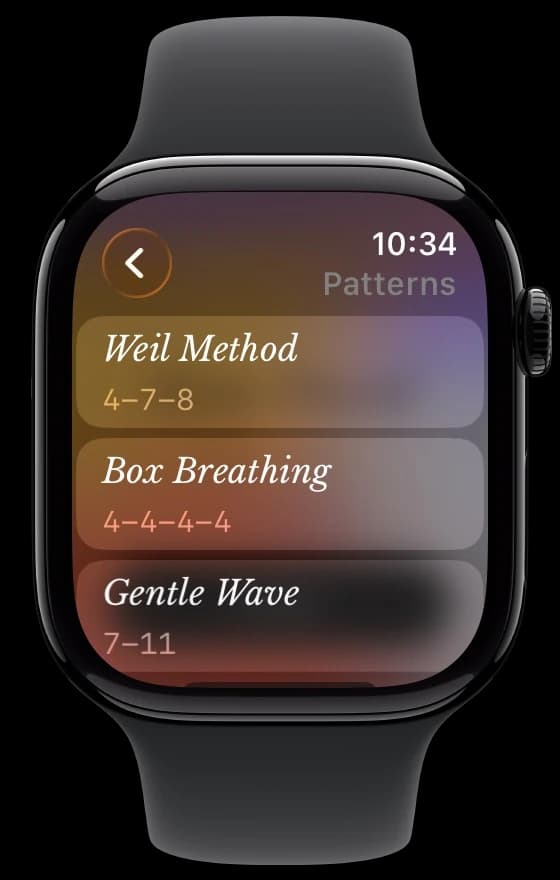
Pick Heart Coherence 6-6 in Birch on iPhone or Apple Watch and set a time. On the Watch, haptic cues tell you when to turn the breath, so you can close your eyes. Sessions can count toward Mindful Minutes in Apple Health. Birch also has Slow-Paced 4-6 (six breaths a minute) if you want something in between.
Download on theApp Store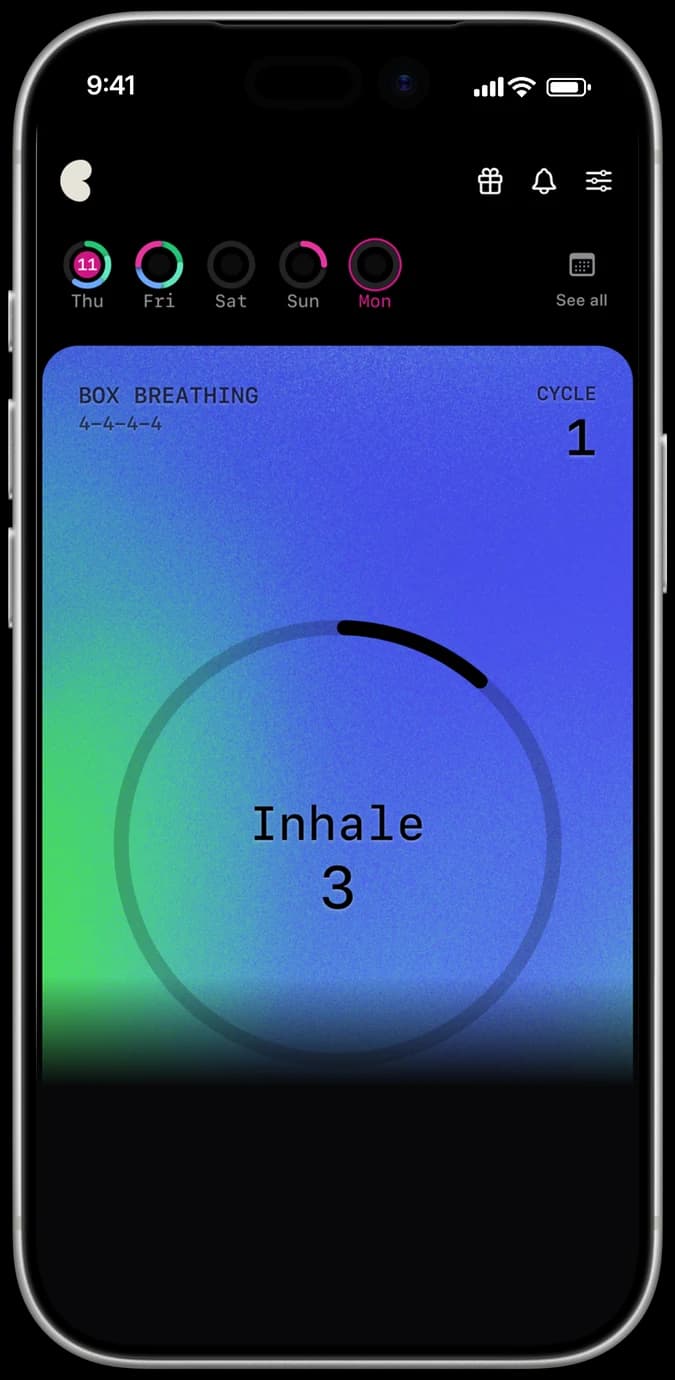
Frequently asked questions
Is coherent breathing the same as resonance breathing?
They are closely related and often used interchangeably. Both describe slow, even breathing at about five to six breaths a minute. Resonance-frequency programs may fine-tune the exact pace for each person.
What is heart coherence breathing?
It's another name for the same slow, even rhythm, often taught alongside heart rate variability. Birch's Heart Coherence preset is 6 seconds in and 6 seconds out.
How long should you do coherent breathing?
Start with about 5 minutes a day and build up as it feels comfortable. Regular short sessions are easier to keep up than occasional long ones.
Do I need an HRV monitor or chest strap?
No. You can practice with any steady pacer, like the one on this page or Birch. Monitors are optional extras.
Can I do coherent breathing on Apple Watch?
Apple's built-in Breathe session has a breaths-per-minute setting, so you can approximate an even rhythm there. Birch's Watch app has a dedicated Heart Coherence 6-6 preset with haptic cues. See breathing on Apple Watch.
More breathing guides






Breathe along with Birch
Birch paces Heart Coherence 6-6 for you on iPhone, and on Apple Watch with gentle haptic cues, so you can keep your eyes closed. Keep small daily habits beside your breathing. Free, with no ads, no account, and no subscription.
Download on theApp Store
Sources
- Lehrer & Gevirtz, 2014. Heart rate variability biofeedback: how and why does it work? Frontiers in Psychology
- Zaccaro et al., 2018. How Breath-Control Can Change Your Life: A Systematic Review on Psycho-Physiological Correlates of Slow Breathing. Frontiers in Human Neuroscience
- NHS — Breathing exercises for stress
This guide is for general wellness and education. Birch is not a substitute for professional medical advice. Stop if you feel dizzy or unwell, and talk to a clinician about any health concern.